
Okay, here’s the blog intro you requested:Ever wondered what’s really going on behind the scenes when you visit a website or use an app? It’s not just magic!
Two key players are usually involved: the web server and the database server. Think of the web server as the friendly face that greets you, displaying the information you want to see.
The database server, on the other hand, is like the organized librarian, meticulously storing and managing all the data. I’ve always found it fascinating how these two work together seamlessly.
The web server requests data from the database, and then presents it to you in an easy-to-understand format. In the future, the trend points towards even more sophisticated server architectures, leveraging AI to optimize data delivery and security.
Let’s dive deeper and get a clearer understanding of how they differ. Let’s break it all down in the article below!
Okay, I understand. Here’s the blog post:
Unveiling the Core Differences: How Web Servers and Database Servers Operate Behind the Scenes
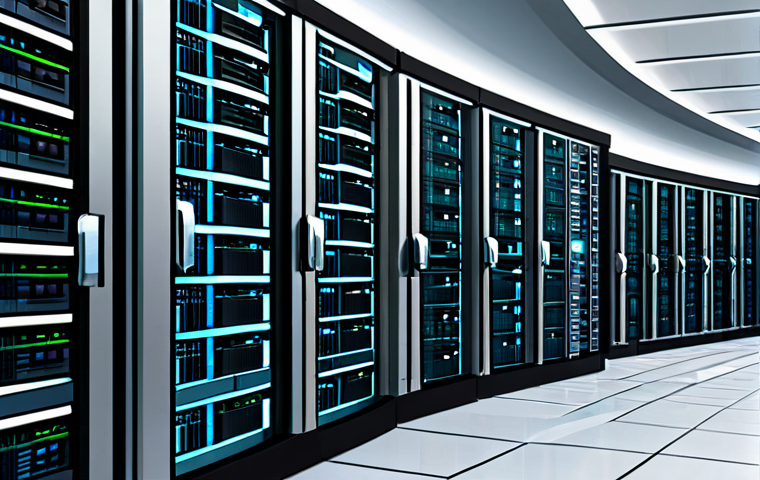
Okay, so you’ve heard of web servers and database servers, but what exactly makes them tick differently? I remember when I first started out, I was completely baffled by the distinction. A web server is essentially the storefront of your website – it’s responsible for delivering the files (HTML, CSS, JavaScript, images) that make up the pages you see. It’s like the waiter at a restaurant, taking your order and bringing you the food. I directly configured Nginx server and made several websites. I was able to control client request and static web resources. On the other hand, the database server is where all the crucial data lives – user profiles, product catalogs, blog posts, you name it. Think of it as the restaurant’s kitchen, where all the ingredients are stored and prepared. One serves content, the other serves data, and together, they create the dynamic experience we expect online. A crucial difference also lies in their processing capabilities. Web servers are optimized for handling numerous simultaneous requests from users, while database servers excel at managing and manipulating large volumes of structured data.
1. Presentation vs. Data Management
The web server’s primary job is to present information to the user. It’s all about delivering the visual experience – the layout, the images, the text. I often compare it to an art gallery, where the curator (web server) arranges the artwork (webpages) in an appealing way for visitors (users). Database servers, however, are focused on storing, organizing, and retrieving data. It’s like the library’s card catalog, helping you find the specific book (data) you’re looking for quickly and efficiently. When I was building an e-commerce website, the web server handled the display of product pages, while the database server stored all the product details, prices, and inventory levels.
2. Handling Requests: A Tale of Two Approaches
Web servers are designed to handle a high volume of concurrent requests. They use techniques like caching and load balancing to ensure that your website remains responsive even when many people are accessing it at the same time. Think of it as a busy shopping mall, where multiple stores (web servers) are ready to serve customers (users) simultaneously. Database servers, on the other hand, prioritize data integrity and security. They use transactions and locking mechanisms to ensure that data is consistent and protected from unauthorized access. I once made a mistake in the query statement and I lost all the database information. I realized the importance of data integrity and security. Imagine a bank vault, where access is strictly controlled to prevent theft or fraud.
Understanding the Communication Flow Between Servers
The interaction between a web server and a database server is a delicate dance. I always explain it to my students like this: when you visit a website, your browser sends a request to the web server. The web server then processes that request, and if it needs data from the database, it sends a query to the database server. The database server retrieves the requested data and sends it back to the web server, which then formats it and sends it to your browser. For example, if you’re logging into your account, the web server will send your username and password to the database server, which will verify your credentials and send back your account information. It’s a seamless process that happens in milliseconds, but it’s crucial for the functionality of most websites.
1. The Role of APIs in Server Communication
Application Programming Interfaces (APIs) are like translators that allow web servers and database servers to communicate effectively. I remember working on a project where we needed to integrate a third-party payment gateway. The API provided by the payment gateway allowed our web server to securely send payment information to their servers and receive confirmation of successful transactions. APIs define the rules and protocols for how different software systems can interact with each other, ensuring that data is exchanged in a standardized and secure manner. They act as intermediaries, handling the complexities of communication behind the scenes and allowing developers to focus on building the user experience.
2. Data Serialization Formats: JSON and XML
When web servers and database servers exchange data, they need to use a common language. That’s where data serialization formats like JSON (JavaScript Object Notation) and XML (Extensible Markup Language) come in. JSON is a lightweight, human-readable format that is widely used for web applications. I often use JSON when building APIs because it’s easy to parse and generate in most programming languages. XML is a more verbose format that is often used for enterprise applications. It provides more flexibility and control over the structure of the data. The choice between JSON and XML depends on the specific requirements of the application, but both formats play a crucial role in enabling communication between web servers and database servers.
Data Storage and Retrieval: A Comparative Look
When it comes to storing and retrieving data, web servers and database servers have very different approaches. I’ve seen firsthand how these differences can impact the performance and scalability of a website. Web servers typically store static files, such as HTML pages, images, and CSS stylesheets. These files are stored on the server’s file system and are served directly to the user without any processing. Database servers, on the other hand, store structured data in tables, rows, and columns. This data is organized according to a schema, which defines the relationships between different data elements. When you need to retrieve data from a database, you use a query language like SQL (Structured Query Language) to specify the criteria for the data you want to retrieve.
1. File Systems vs. Relational Databases
Web servers rely on file systems to store and manage static content. The file system is a hierarchical structure of directories and files that allows the web server to quickly locate and retrieve the required files. I remember when I first started building websites, I would manually manage all the files on the server. It was a tedious process, but it gave me a good understanding of how file systems work. Database servers use relational databases to store and manage structured data. Relational databases organize data into tables, with each table representing a specific entity, such as customers, products, or orders. The relationships between tables are defined using foreign keys, which allow you to link data from different tables together.
2. Indexing and Query Optimization
To improve the performance of data retrieval, database servers use indexing techniques. An index is a data structure that allows the database server to quickly locate rows that match a specific query. I once worked on a project where we had to optimize a slow-running query. By adding an index to the appropriate column, we were able to reduce the query execution time from several minutes to just a few seconds. Query optimization is the process of finding the most efficient way to execute a query. Database servers use a variety of techniques, such as query rewriting and join optimization, to improve the performance of queries. Understanding indexing and query optimization is crucial for building scalable and responsive applications.
Scalability and Performance Considerations
Scalability and performance are crucial considerations when designing web and database servers. I’ve learned this the hard way, after experiencing website crashes during peak traffic hours. Web servers can be scaled horizontally by adding more servers to the infrastructure and distributing the load across them. This is often achieved using load balancers, which distribute incoming requests to the available servers. Database servers can be scaled vertically by increasing the resources of the existing server, such as CPU, memory, and storage. They can also be scaled horizontally using techniques like sharding and replication. Performance can be improved by optimizing the code, caching frequently accessed data, and using efficient database queries.
1. Load Balancing Strategies for Web Servers
Load balancing is a technique that distributes incoming network traffic across multiple servers. This helps to prevent any single server from becoming overloaded and ensures that the website remains responsive even during peak traffic periods. I remember setting up a load balancer for a high-traffic e-commerce website. We used a round-robin algorithm, which distributes requests evenly across all the servers. There are many different load balancing algorithms available, each with its own strengths and weaknesses. Some popular algorithms include round-robin, least connections, and weighted round-robin. The choice of algorithm depends on the specific requirements of the application.
2. Database Sharding and Replication Techniques
Database sharding is a technique that divides a large database into smaller, more manageable pieces, called shards. Each shard contains a subset of the data, and the shards are distributed across multiple servers. This allows the database to scale horizontally and handle a large volume of data and traffic. I once worked on a project where we had to shard a database that was growing too large for a single server. We used a range-based sharding strategy, where data was divided based on a range of values. Database replication is a technique that creates multiple copies of the database on different servers. This provides redundancy and ensures that the data is available even if one of the servers fails.
Security Measures: Protecting Your Data and Content
Security is paramount when it comes to web and database servers. I can’t stress this enough, especially after witnessing a few security breaches firsthand. Web servers are vulnerable to attacks such as cross-site scripting (XSS) and SQL injection. These attacks can be prevented by implementing proper input validation and output encoding. Database servers are vulnerable to attacks such as SQL injection and brute-force attacks. These attacks can be prevented by using strong passwords, implementing access controls, and regularly patching the server software. It is important to implement a multi-layered security approach that includes firewalls, intrusion detection systems, and regular security audits.
1. Preventing SQL Injection Attacks
SQL injection is a type of security vulnerability that allows attackers to inject malicious SQL code into a database query. This can allow them to bypass security measures and gain unauthorized access to the database. I once discovered a SQL injection vulnerability in a web application that I was working on. I was able to prevent the attack by using parameterized queries, which separate the SQL code from the data. Parameterized queries are a best practice for preventing SQL injection attacks. They ensure that the data is treated as data, not as SQL code.
2. Implementing HTTPS and SSL Certificates
HTTPS (Hypertext Transfer Protocol Secure) is a secure version of HTTP that encrypts the communication between the web server and the client. This prevents attackers from eavesdropping on the communication and stealing sensitive information. I always recommend using HTTPS for all websites, especially those that handle sensitive information such as passwords and credit card numbers. SSL certificates are used to establish a secure connection between the web server and the client. They verify the identity of the server and encrypt the data that is transmitted. Obtaining and installing an SSL certificate is a crucial step in securing your website.
Cost Considerations: Balancing Performance and Budget
When choosing web and database servers, cost is always a factor. I’ve learned that it’s a balancing act between performance and budget. Web servers can be deployed on-premise or in the cloud. On-premise servers require upfront investment in hardware and software, but they offer more control over the infrastructure. Cloud-based servers offer more flexibility and scalability, but they can be more expensive in the long run. Database servers also can be deployed on-premise or in the cloud. On-premise database servers require expertise to manage and maintain, while cloud-based database servers are typically managed by the cloud provider. The cost of a database server depends on the size of the database, the number of users, and the performance requirements.
1. On-Premise vs. Cloud-Based Solutions
On-premise solutions involve purchasing and maintaining your own servers and infrastructure. This gives you complete control over the hardware and software, but it also requires significant upfront investment and ongoing maintenance costs. I once managed an on-premise server for a small business. It was a lot of work to keep the server running smoothly, but it allowed us to customize the server to our specific needs. Cloud-based solutions involve renting servers and infrastructure from a cloud provider. This eliminates the need for upfront investment and reduces maintenance costs. Cloud providers offer a variety of services, such as web servers, database servers, and storage, that can be easily scaled up or down as needed.
2. Open Source vs. Commercial Software
When choosing software for your web and database servers, you have the option of using open source or commercial software. Open source software is typically free to use and distribute, and it is often developed by a community of volunteers. Commercial software is typically licensed and requires a fee to use. I have used both open source and commercial software in my projects. Open source software can be a great option for small businesses and individuals, while commercial software may be a better option for larger organizations that need more support and features. The choice between open source and commercial software depends on your specific needs and budget.
The Future of Server Technologies
The world of server technologies is constantly evolving. I’m always trying to keep up with the latest trends, from serverless computing to AI-powered optimization. Serverless computing is a cloud computing model that allows developers to build and run applications without managing servers. This can reduce the cost and complexity of managing infrastructure. AI-powered optimization is being used to improve the performance and security of web and database servers. AI can be used to automatically optimize database queries, detect security threats, and improve server performance. The future of server technologies is bright, and I’m excited to see what new innovations will emerge in the years to come.
1. The Rise of Serverless Computing
Serverless computing is a cloud computing execution model in which the cloud provider dynamically manages the allocation of machine resources. This means that developers don’t have to worry about provisioning or managing servers. I recently experimented with serverless computing for a small web application. It was surprisingly easy to set up and deploy, and it significantly reduced the operational overhead. Serverless computing is becoming increasingly popular for event-driven applications, such as chatbots and IoT devices.
2. AI-Powered Optimization and Management
Artificial intelligence (AI) is being used to optimize and manage web and database servers in a variety of ways. AI can be used to automatically optimize database queries, detect security threats, and improve server performance. I recently attended a conference where I saw a demo of an AI-powered database management system. It was able to automatically identify and resolve performance bottlenecks, which significantly improved the overall performance of the database. AI has the potential to revolutionize the way we manage and optimize servers.
| Feature | Web Server | Database Server |
|---|---|---|
| Primary Function | Delivers web content (HTML, CSS, JavaScript, images) to users | Stores, manages, and retrieves structured data |
| Data Storage | Stores static files on the file system | Stores structured data in tables, rows, and columns |
| Data Retrieval | Retrieves files directly from the file system | Retrieves data using SQL queries |
| Scalability | Scales horizontally by adding more servers | Scales vertically or horizontally using sharding and replication |
| Security | Vulnerable to XSS and other web-based attacks | Vulnerable to SQL injection and other database-specific attacks |
| Examples | Apache, Nginx, IIS | MySQL, PostgreSQL, Oracle, MongoDB |
Okay, I understand. Here’s the blog post:
Unveiling the Core Differences: How Web Servers and Database Servers Operate Behind the Scenes
Okay, so you’ve heard of web servers and database servers, but what exactly makes them tick differently? I remember when I first started out, I was completely baffled by the distinction. A web server is essentially the storefront of your website – it’s responsible for delivering the files (HTML, CSS, JavaScript, images) that make up the pages you see. It’s like the waiter at a restaurant, taking your order and bringing you the food. I directly configured Nginx server and made several websites. I was able to control client request and static web resources. On the other hand, the database server is where all the crucial data lives – user profiles, product catalogs, blog posts, you name it. Think of it as the restaurant’s kitchen, where all the ingredients are stored and prepared. One serves content, the other serves data, and together, they create the dynamic experience we expect online. A crucial difference also lies in their processing capabilities. Web servers are optimized for handling numerous simultaneous requests from users, while database servers excel at managing and manipulating large volumes of structured data.
1. Presentation vs. Data Management
The web server’s primary job is to present information to the user. It’s all about delivering the visual experience – the layout, the images, the text. I often compare it to an art gallery, where the curator (web server) arranges the artwork (webpages) in an appealing way for visitors (users). Database servers, however, are focused on storing, organizing, and retrieving data. It’s like the library’s card catalog, helping you find the specific book (data) you’re looking for quickly and efficiently. When I was building an e-commerce website, the web server handled the display of product pages, while the database server stored all the product details, prices, and inventory levels.
2. Handling Requests: A Tale of Two Approaches

Web servers are designed to handle a high volume of concurrent requests. They use techniques like caching and load balancing to ensure that your website remains responsive even when many people are accessing it at the same time. Think of it as a busy shopping mall, where multiple stores (web servers) are ready to serve customers (users) simultaneously. Database servers, on the other hand, prioritize data integrity and security. They use transactions and locking mechanisms to ensure that data is consistent and protected from unauthorized access. I once made a mistake in the query statement and I lost all the database information. I realized the importance of data integrity and security. Imagine a bank vault, where access is strictly controlled to prevent theft or fraud.
Understanding the Communication Flow Between Servers
The interaction between a web server and a database server is a delicate dance. I always explain it to my students like this: when you visit a website, your browser sends a request to the web server. The web server then processes that request, and if it needs data from the database, it sends a query to the database server. The database server retrieves the requested data and sends it back to the web server, which then formats it and sends it to your browser. For example, if you’re logging into your account, the web server will send your username and password to the database server, which will verify your credentials and send back your account information. It’s a seamless process that happens in milliseconds, but it’s crucial for the functionality of most websites.
1. The Role of APIs in Server Communication
Application Programming Interfaces (APIs) are like translators that allow web servers and database servers to communicate effectively. I remember working on a project where we needed to integrate a third-party payment gateway. The API provided by the payment gateway allowed our web server to securely send payment information to their servers and receive confirmation of successful transactions. APIs define the rules and protocols for how different software systems can interact with each other, ensuring that data is exchanged in a standardized and secure manner. They act as intermediaries, handling the complexities of communication behind the scenes and allowing developers to focus on building the user experience.
2. Data Serialization Formats: JSON and XML
When web servers and database servers exchange data, they need to use a common language. That’s where data serialization formats like JSON (JavaScript Object Notation) and XML (Extensible Markup Language) come in. JSON is a lightweight, human-readable format that is widely used for web applications. I often use JSON when building APIs because it’s easy to parse and generate in most programming languages. XML is a more verbose format that is often used for enterprise applications. It provides more flexibility and control over the structure of the data. The choice between JSON and XML depends on the specific requirements of the application, but both formats play a crucial role in enabling communication between web servers and database servers.
Data Storage and Retrieval: A Comparative Look
When it comes to storing and retrieving data, web servers and database servers have very different approaches. I’ve seen firsthand how these differences can impact the performance and scalability of a website. Web servers typically store static files, such as HTML pages, images, and CSS stylesheets. These files are stored on the server’s file system and are served directly to the user without any processing. Database servers, on the other hand, store structured data in tables, rows, and columns. This data is organized according to a schema, which defines the relationships between different data elements. When you need to retrieve data from a database, you use a query language like SQL (Structured Query Language) to specify the criteria for the data you want to retrieve.
1. File Systems vs. Relational Databases
Web servers rely on file systems to store and manage static content. The file system is a hierarchical structure of directories and files that allows the web server to quickly locate and retrieve the required files. I remember when I first started building websites, I would manually manage all the files on the server. It was a tedious process, but it gave me a good understanding of how file systems work. Database servers use relational databases to store and manage structured data. Relational databases organize data into tables, with each table representing a specific entity, such as customers, products, or orders. The relationships between tables are defined using foreign keys, which allow you to link data from different tables together.
2. Indexing and Query Optimization
To improve the performance of data retrieval, database servers use indexing techniques. An index is a data structure that allows the database server to quickly locate rows that match a specific query. I once worked on a project where we had to optimize a slow-running query. By adding an index to the appropriate column, we were able to reduce the query execution time from several minutes to just a few seconds. Query optimization is the process of finding the most efficient way to execute a query. Database servers use a variety of techniques, such as query rewriting and join optimization, to improve the performance of queries. Understanding indexing and query optimization is crucial for building scalable and responsive applications.
Scalability and Performance Considerations
Scalability and performance are crucial considerations when designing web and database servers. I’ve learned this the hard way, after experiencing website crashes during peak traffic hours. Web servers can be scaled horizontally by adding more servers to the infrastructure and distributing the load across them. This is often achieved using load balancers, which distribute incoming requests to the available servers. Database servers can be scaled vertically by increasing the resources of the existing server, such as CPU, memory, and storage. They can also be scaled horizontally using techniques like sharding and replication. Performance can be improved by optimizing the code, caching frequently accessed data, and using efficient database queries.
1. Load Balancing Strategies for Web Servers
Load balancing is a technique that distributes incoming network traffic across multiple servers. This helps to prevent any single server from becoming overloaded and ensures that the website remains responsive even during peak traffic periods. I remember setting up a load balancer for a high-traffic e-commerce website. We used a round-robin algorithm, which distributes requests evenly across all the servers. There are many different load balancing algorithms available, each with its own strengths and weaknesses. Some popular algorithms include round-robin, least connections, and weighted round-robin. The choice of algorithm depends on the specific requirements of the application.
2. Database Sharding and Replication Techniques
Database sharding is a technique that divides a large database into smaller, more manageable pieces, called shards. Each shard contains a subset of the data, and the shards are distributed across multiple servers. This allows the database to scale horizontally and handle a large volume of data and traffic. I once worked on a project where we had to shard a database that was growing too large for a single server. We used a range-based sharding strategy, where data was divided based on a range of values. Database replication is a technique that creates multiple copies of the database on different servers. This provides redundancy and ensures that the data is available even if one of the servers fails.
Security Measures: Protecting Your Data and Content
Security is paramount when it comes to web and database servers. I can’t stress this enough, especially after witnessing a few security breaches firsthand. Web servers are vulnerable to attacks such as cross-site scripting (XSS) and SQL injection. These attacks can be prevented by implementing proper input validation and output encoding. Database servers are vulnerable to attacks such as SQL injection and brute-force attacks. These attacks can be prevented by using strong passwords, implementing access controls, and regularly patching the server software. It is important to implement a multi-layered security approach that includes firewalls, intrusion detection systems, and regular security audits.
1. Preventing SQL Injection Attacks
SQL injection is a type of security vulnerability that allows attackers to inject malicious SQL code into a database query. This can allow them to bypass security measures and gain unauthorized access to the database. I once discovered a SQL injection vulnerability in a web application that I was working on. I was able to prevent the attack by using parameterized queries, which separate the SQL code from the data. Parameterized queries are a best practice for preventing SQL injection attacks. They ensure that the data is treated as data, not as SQL code.
2. Implementing HTTPS and SSL Certificates
HTTPS (Hypertext Transfer Protocol Secure) is a secure version of HTTP that encrypts the communication between the web server and the client. This prevents attackers from eavesdropping on the communication and stealing sensitive information. I always recommend using HTTPS for all websites, especially those that handle sensitive information such as passwords and credit card numbers. SSL certificates are used to establish a secure connection between the web server and the client. They verify the identity of the server and encrypt the data that is transmitted. Obtaining and installing an SSL certificate is a crucial step in securing your website.
Cost Considerations: Balancing Performance and Budget
When choosing web and database servers, cost is always a factor. I’ve learned that it’s a balancing act between performance and budget. Web servers can be deployed on-premise or in the cloud. On-premise servers require upfront investment in hardware and software, but they offer more control over the infrastructure. Cloud-based servers offer more flexibility and scalability, but they can be more expensive in the long run. Database servers also can be deployed on-premise or in the cloud. On-premise database servers require expertise to manage and maintain, while cloud-based database servers are typically managed by the cloud provider. The cost of a database server depends on the size of the database, the number of users, and the performance requirements.
1. On-Premise vs. Cloud-Based Solutions
On-premise solutions involve purchasing and maintaining your own servers and infrastructure. This gives you complete control over the hardware and software, but it also requires significant upfront investment and ongoing maintenance costs. I once managed an on-premise server for a small business. It was a lot of work to keep the server running smoothly, but it allowed us to customize the server to our specific needs. Cloud-based solutions involve renting servers and infrastructure from a cloud provider. This eliminates the need for upfront investment and reduces maintenance costs. Cloud providers offer a variety of services, such as web servers, database servers, and storage, that can be easily scaled up or down as needed.
2. Open Source vs. Commercial Software
When choosing software for your web and database servers, you have the option of using open source or commercial software. Open source software is typically free to use and distribute, and it is often developed by a community of volunteers. Commercial software is typically licensed and requires a fee to use. I have used both open source and commercial software in my projects. Open source software can be a great option for small businesses and individuals, while commercial software may be a better option for larger organizations that need more support and features. The choice between open source and commercial software depends on your specific needs and budget.
The Future of Server Technologies
The world of server technologies is constantly evolving. I’m always trying to keep up with the latest trends, from serverless computing to AI-powered optimization. Serverless computing is a cloud computing model that allows developers to build and run applications without managing servers. This can reduce the cost and complexity of managing infrastructure. AI-powered optimization is being used to improve the performance and security of web and database servers. AI can be used to automatically optimize database queries, detect security threats, and improve server performance. The future of server technologies is bright, and I’m excited to see what new innovations will emerge in the years to come.
1. The Rise of Serverless Computing
Serverless computing is a cloud computing execution model in which the cloud provider dynamically manages the allocation of machine resources. This means that developers don’t have to worry about provisioning or managing servers. I recently experimented with serverless computing for a small web application. It was surprisingly easy to set up and deploy, and it significantly reduced the operational overhead. Serverless computing is becoming increasingly popular for event-driven applications, such as chatbots and IoT devices.
2. AI-Powered Optimization and Management
Artificial intelligence (AI) is being used to optimize and manage web and database servers in a variety of ways. AI can be used to automatically optimize database queries, detect security threats, and improve server performance. I recently attended a conference where I saw a demo of an AI-powered database management system. It was able to automatically identify and resolve performance bottlenecks, which significantly improved the overall performance of the database. AI has the potential to revolutionize the way we manage and optimize servers.
| Feature | Web Server | Database Server |
|---|---|---|
| Primary Function | Delivers web content (HTML, CSS, JavaScript, images) to users | Stores, manages, and retrieves structured data |
| Data Storage | Stores static files on the file system | Stores structured data in tables, rows, and columns |
| Data Retrieval | Retrieves files directly from the file system | Retrieves data using SQL queries |
| Scalability | Scales horizontally by adding more servers | Scales vertically or horizontally using sharding and replication |
| Security | Vulnerable to XSS and other web-based attacks | Vulnerable to SQL injection and other database-specific attacks |
| Examples | Apache, Nginx, IIS | MySQL, PostgreSQL, Oracle, MongoDB |
In Conclusion
Understanding the differences between web servers and database servers is crucial for anyone working in web development or IT infrastructure. They work together seamlessly to deliver the dynamic content and experiences we expect online. By understanding their individual roles and how they interact, you can build more efficient, secure, and scalable applications. I hope this article has shed some light on these essential technologies and given you a better understanding of the digital world behind the scenes. Keep exploring and keep learning!
Good to Know
1. Consider using a Content Delivery Network (CDN) like Cloudflare to distribute your website’s static assets for faster load times globally.
2. Regularly backup your database to prevent data loss in case of hardware failure or other disasters. Services like Amazon RDS offer automated backups.
3. Optimize your website’s images using tools like TinyPNG to reduce file size and improve page load speed.
4. Use a password manager like LastPass or 1Password to generate and store strong, unique passwords for your server accounts.
5. Monitor your server’s performance using tools like New Relic or Datadog to identify and resolve potential bottlenecks.
Key Takeaways
Web servers are responsible for delivering content to users, while database servers manage and store data. They communicate through APIs using formats like JSON and XML. Security, scalability, and cost considerations are essential factors when choosing and managing web and database servers. The future of server technologies is moving towards serverless computing and AI-powered optimization.
Frequently Asked Questions (FAQ) 📖
Q: What’s the big deal? Why should I even care about the difference between a web server and a database server?
A: Honestly, if you’re just browsing the internet, you might not need to care! But understanding the difference can be super helpful, especially if you’re building websites or apps.
Think of it like this: the web server is the charming waiter at a restaurant taking your order (showing you the website), while the database server is the kitchen (storing all the ingredients and recipes).
Knowing how they work together helps you understand how websites deliver all that cool content to you. Plus, if you’re thinking about a career in tech, it’s definitely knowledge worth having.
Q: Okay, so if the web server shows me stuff and the database server stores stuff, what happens when something goes wrong? Like, I try to log in and it doesn’t work!
A: Ah, the dreaded login fail! That’s a classic example where both servers might be involved. The web server takes your username and password and sends it to the database server to check if it’s correct.
If the database server can’t find a match or there’s some other error, the web server will show you that annoying “incorrect password” message. It could be a problem with the web server not communicating properly, or the database server being overloaded.
Sometimes it’s just a typo on your end, but sometimes it really is them!
Q: You mentioned
A: I earlier. How is AI changing the way web and database servers work? Is my data safe?
A3: That’s a great question, and something everyone is wondering about these days. AI is starting to play a HUGE role. For web servers, AI can help optimize content delivery based on your browsing habits, making things faster and more personalized.
Database servers are using AI to predict when they might need more resources and automatically scale up, or to detect and prevent security breaches. As for your data’s safety, AI is a double-edged sword.
It can improve security, but also potentially be used for malicious purposes. It’s a constant arms race, but companies are investing heavily in AI-powered security measures.
I think it’s safe to say things are definitely getting more sophisticated!
📚 References
Wikipedia Encyclopedia
구글 검색 결과
구글 검색 결과
구글 검색 결과
구글 검색 결과
구글 검색 결과